Serialzws
Serialzws learned to listen for the places where narratives telescoped into one another. A funeral speech swallowed by small talk in the foyer; a software log that aggregated ten errors into one alert; two lovers whose messages crossed and thereby created a third, unintended conversation. Each of these moments contained the same structural property: a discrete thing serialized into a larger run of meaning, whose boundaries were softened or reinforced by what was left unsaid.
One autumn, a publisher contracted him to proofread a manuscript fragment said to contain a "ghost punctuation"—a lapse in the author's intent that left paragraphs improperly married. Serialzws accepted, and as he read he began to feel the architecture of the author's thought: the author loved sequences, recurring motifs, and numbered lists that impersonated fate. But at a crucial turn, the narrative failed to choose its seam. Two plotlines collided on the same page without a break; the protagonist's trajectory folded into a subplot and lost its agentive force. With a practiced hand, Serialzws inserted the equivalent of a zero-width pause—no words, only a rebalancing of cadence—and the story sighed into coherence. The reader, unaware of any edit, experienced what the author had intended but could not quite set in type: an aftertaste of choice.
This is the paradox of the zws: to name the invisible is to alter it. By making seams visible—through diagrams, demonstrations, law, or code—you force a negotiation about the ethics of continuity. Serialzws never resolved whether the pause is inherently good or ill. He only insisted that all seams be accounted for in the ledger of effect: every silence leaves a wake. serialzws
At the end, his archive had more than drawers of vellum. It had maps: networks of contextual shifts where one sequence bled into another; histograms of attention; forensic traces showing when a small omission had cascaded into policy. He created a lexicon—words for invisible transitions, verbs for the act of insertion or deletion, nouns for the weight of an absent mark. The lexicon itself became a kind of weapon and shelter.
To the technocrats, his work was metaphysics. To poets, it was a fine instrument of craft. Programmers sought him when the parsing failed—when invisible characters corrupted filenames, or when words collided and caused systems to crash. He taught them to treat the zws not as a bug but as a grammar: an operator that permitted composite forms without visible clutter. He drew diagrams—streams of tokens, nodes of intent, filaments of whitespace—that looked like constellations and read like syntax. Serialzws learned to listen for the places where
"serialzws"—a compact, oblique token—feels like a ciphered artifact of a digital era, a name that sits at the intersection of sequence and silence. Parsing it as compound: "serial" implies ordered repetition, identification, or an ongoing tale; "zws" evokes the zero-width space, that invisible character used by software and typographers to shape text without visible interruption. Together they suggest a story about continuity interrupted by invisible seams.
Perhaps that is all change requires: someone to notice the invisible space between things and decide, with deliberate hand, whether to leave it, to seal it, or to open it into something new. The world, like text, is always being serialized—broken into enumerated parts and reconstituted by the invisible characters we choose not to see. Serialzws taught that to live with integrity is to tend those seams. One autumn, a publisher contracted him to proofread
People asked him, half in jest, whether a silence could be owned. He would hand them a card with two printed words separated by nothing. "Read them aloud," he said. They did. Without the mark, their sentences flowed like water; with his invisible cut, their tongues hesitated, and meaning shifted. It was not that content changed—the syllables remained the same—but cadence altered perception. A name became an invocation; a date, a dirge; a promise, a hinge.
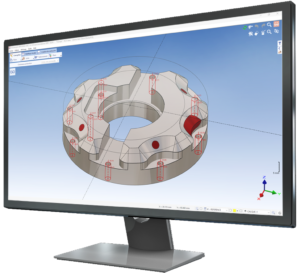
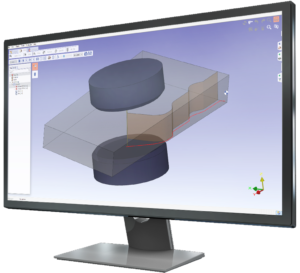
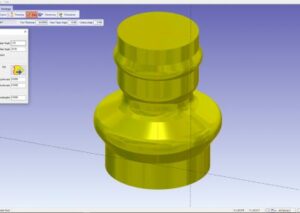
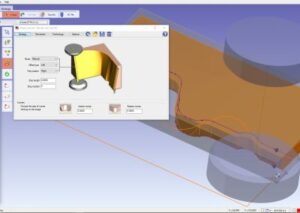
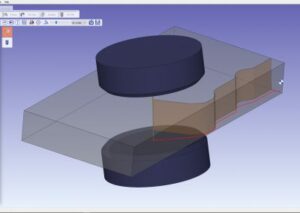
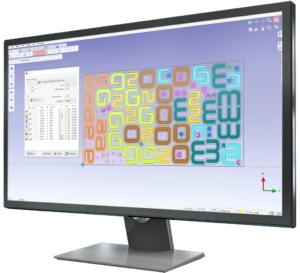
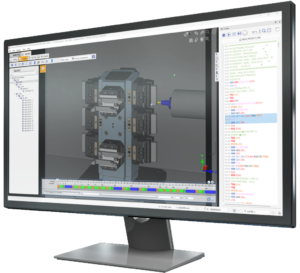
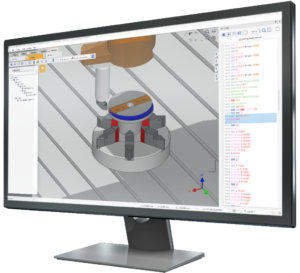
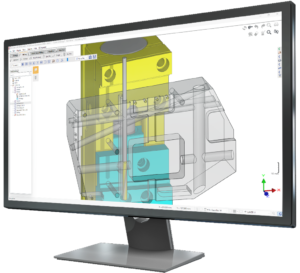
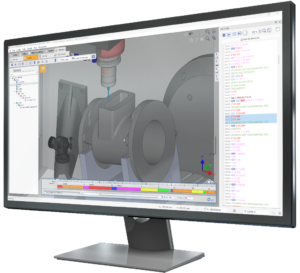
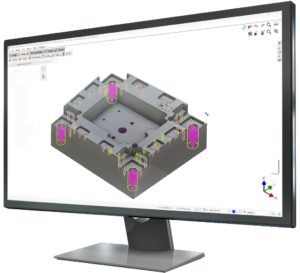
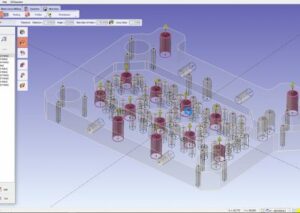
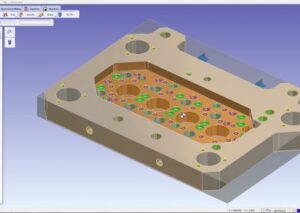
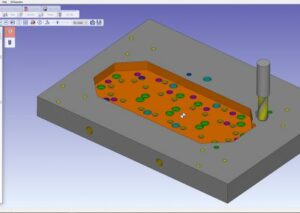
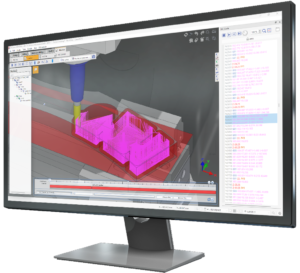 Sviluppata da GO2cam International, millyuGO® è la risposta alle problematiche specifiche delle produzioni che necessitano di un’asportazione di materiale considerevole.