You can place these elements in a variety of scenes. In a seaside village, the serpent might be a long eel found among driftwood, its presence interpreted as an omen; night’s wings there hold the brine and the gull-calls in a softer register. In an ancient city, the serpent could be a carved emblem on a temple threshold, its meaning folded into ritual; night’s wings would be the stone shadows cast by lamps and the echo of steps in narrow alleys. Each setting contours the symbolic weight differently, but the core relationship—earthbound, secretive motion contrasted with expansive, concealing darkness, with V.K. as the human mark that ties them together—remains constant.
On a thematic level, serpent and wings of night offer a meditation on thresholds—between life and death, known and unknown, speech and silence. They invite questions about how humans place signatures on landscapes: why we carve initials into trees, why we leave small tokens at altars, why we tell stories that transform the ordinary into myth. The serpent and night are companions for these rituals; they are both the raw materials of superstition and the scaffolding for ethics and memory.
Consider a short scene that crystallizes these ideas: a lone traveler arrives at a ruined manor at dusk. The doorway is choked with ivy; the traveler steps carefully, lantern raised. A faint movement near the stair—brass scales catching the lantern glow—reveals a serpent, coiled but not overtly hostile. From above, the wings of night fold down, and the lantern’s light seems softer, the beam lost in velvet. The traveler notices initials carved into the newel post—V.K.—and in that moment understands the place as one that accepts both shelter and scrutiny. The serpent does not strike; it becomes companion to watch and witness. The traveler leaves a small offering—bread wrapped in cloth—and departs, carrying a story that will be shaped by how it is told later.
In writing of serpent and wings, the imagination is encouraged to shift registers: from the sensory to the symbolic, from local description to mythic resonance. The serpent’s scale is a texture: faint ridges that catch lamplight, a whisper against bark. Night’s wing is a sound: the deep inhale of a town as lamps are doused, the distant bell that seems to come from everywhere and nowhere. V.K. is a trace: a single letter that refracts into many narratives.
There is a rhythm to these images: coil, floe, mark. Repetition is not repetition when it returns with variation. Each night that the wings descend, each motion of the serpent, is a different inflection. Once, the serpent is content to press close to the warm stones beneath a cottage; another night it will coil high in the ruined archway of a monastery, its silhouette measured against the moon. Sometimes the wings of night are almost tender, pressing dew into spiderwebs so the world glitters with patient tiny lights; other times they are a fierce curtain, hiding movements that make the air taut.
There is also a moral ambiguity in these images. The serpent is neither wholly villain nor saint; it is mechanism and memory. When it kills, it performs an economy—energy conserved, balance restored, a lesson that survival requires negotiation. Night is not merely the antagonist of day; it is a necessary counterpoint that allows day to be known. V.K. moves within that moral gray, a hand that might heal or wound depending on who reads the mark and how. This ambiguity is a productive tension; stories that resolve it too neatly lose their teeth.
V.K. — the signature found later, carved into a damp windowsill, or simply an initial whispered between two strangers — was the thin seam that joined these two presences. V.K. did not announce itself loudly. It was a set of soft disturbances: a stray glove on the stoop, an unclaimed melody hummed under the hum of traffic, the imprint of a footprint that led nowhere expected. Where V.K. appeared, stories multiplied and the map of the ordinary rearranged itself to admit the extraordinary.

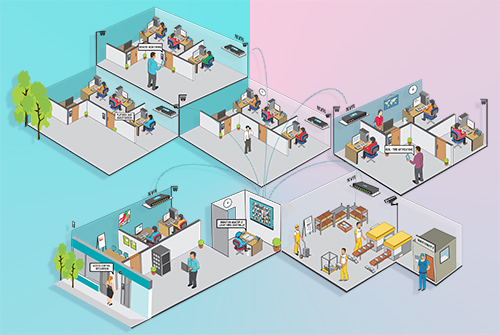







 Centralized data access anytime from anywhere.
 A smart and user-friendly system without having any hardware and technical skills
 Quick resolution with savvy 24×7 customer support.
 Exceptionally efficient Marg Cloud online software for greatly taking a business to the highest level.