HD Videos always in sync
Video players never go out of sync with our cutting edge technology, even across different episode. So binge watch party TV shows in single watch party.
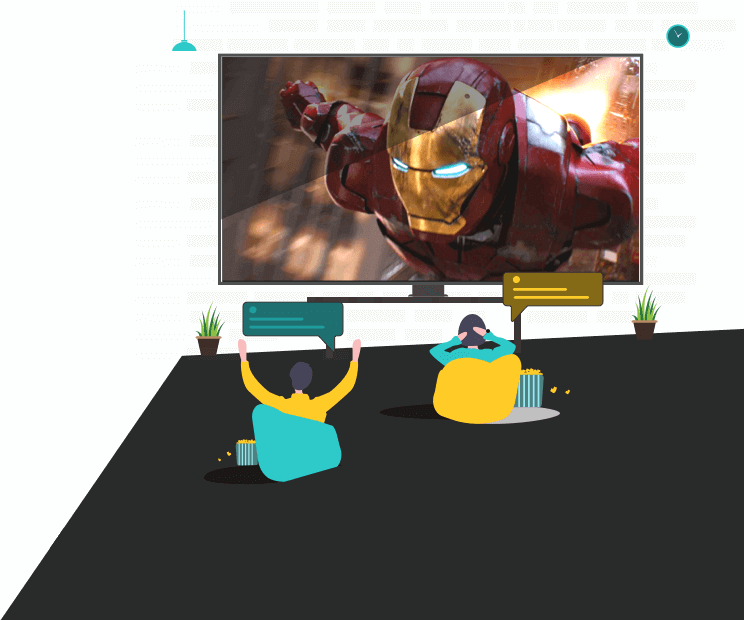
Start playing video on Netflix or other supported platforms.
Once video starts playing, click the Flickcall logo visible on top right to start watch-party (visible for 10 sec). You can also start party from Flickcall icon on chrome toolbar.
Click start party and copy invite link. Send the invite link to anyone to join your watch party.










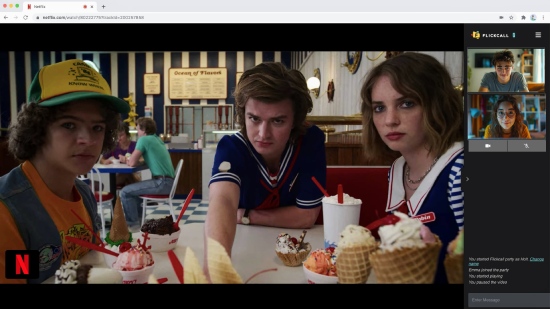
Create watch parties on Netflix, Disney+, JioHotstar, JioHotstar, HBO Max, MAX, Hulu, Prime Video, Youtube, Zee5, Sony Liv, JioHotstar with Flickcall.
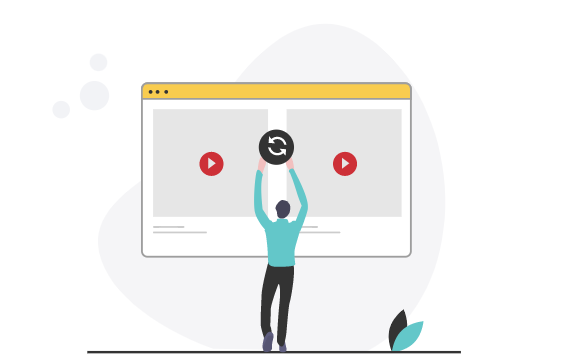
Video players never go out of sync with our cutting edge technology, even across different episode. So binge watch party TV shows in single watch party.
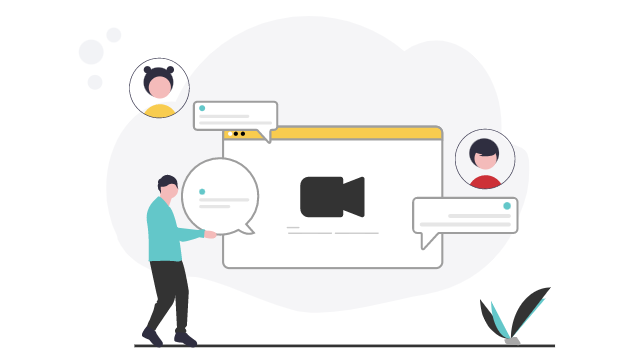
Watch your friends laughing with you, Emotions shared in real-time. This is the next best thing after being together.
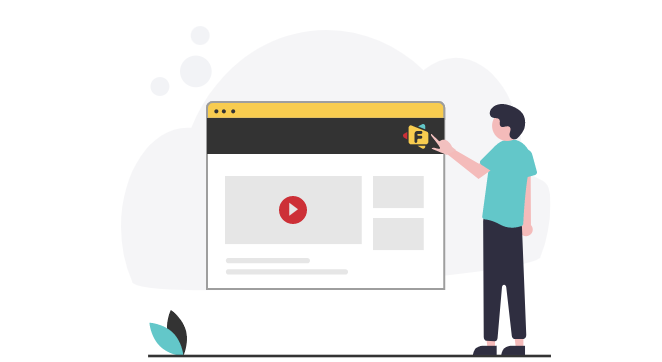
After installing extension, play the video and click Flickcall logo at top right to start party. Easy-peasy!!
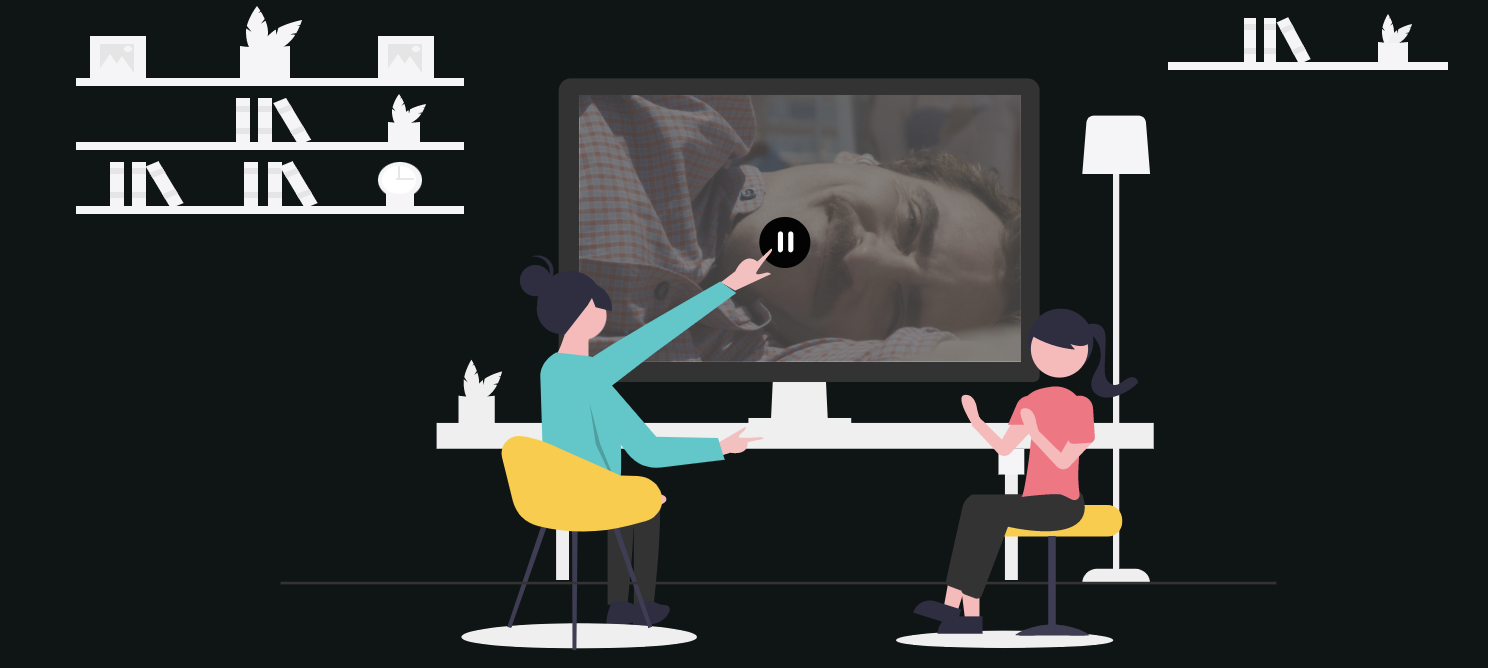
Mic is muted automatically during video play and activated whenever video is paused to engage in seamless conversations. So hit pause and start speaking.
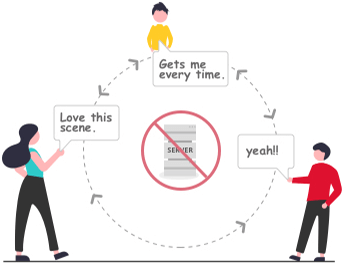
Our peer to peer technology delivers your personal chats and calls directly to your friends instead of the traditional approach of routing it via servers.
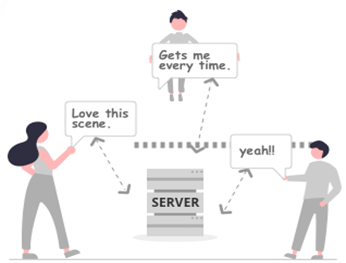
* In some cases, firewall setting doesn't allow direct connection, the calls and messages are encrypted and routed via our servers.
Still, cam free did not grant immunity from loneliness or suspicion. In a social economy where visibility signals trust, Wendy sometimes met skepticism. New acquaintances would ask, with a half-smile, “So — no social media at all?” and the question often disguised unease: how to allocate intimacy when a person declined the usual markers. She learned the patient work of explaining briefly and then letting the relationship find other bearings: shared meals, letters, late walks where the conversation could curve and meander without an algorithm nudging it along.
In the end, Wendy Fiore’s cam-free life was less about withdrawal and more about choice. It asserted a simple principle: visibility is not the only currency of worth. In a culture that increasingly measures people by likenesses and metrics, she kept alive another possibility—that presence can be a private offering and that some things accrue value precisely because we do not publish them. Her life argued, quietly, for attention as a generous and intentional act. It suggested that in an era of relentless broadcasting, the rare act of looking up and really seeing might be the most radical thing left.
Wendy Fiore moved through the world like someone who had learned the art of leaving small, deliberate spaces of silence wherever she went. Not silence born of shyness, but a curated stillness—an intentional pause that made the bright and noisy parts of life feel sharper by contrast. People noticed it first in the way she listened: wholly, without the flicker of a phone or the reflexive half-answer that fills polite conversation. That stillness followed her into larger choices. When everyone around her performed their lives for an audience, she chose to live cam free.
Wendy’s choice complicated how others understood her. Some labeled her aloof, others mysterious; many, frankly, thought her a missed branding opportunity. That response said as much about the age as it did about her. The public sphere had learned to equate visibility with value. When you archived your life in feeds and stories, the data footprint became the biography. Wendy’s absence from those archives forced acquaintances to remember her as she appeared in the foggy, imperfect theater of real life: the woman who arrived late to dinner with a crooked smile and a story about a dog she’d rescued on a rainy Tuesday; the neighbor who mended a sweater no one asked her to fix; the colleague whose writing read like a slow, careful conversation.
“Cam free” began as a practical phrase in a social era that reduced presence to pixels. It meant no constant livestreams, no curated highlights, no scheduled intimacy sold in subscriptions. For Wendy, cam free became a philosophy. It was not rejection of technology—she used devices when they served a purpose—but a boundary against the extraction of attention and the monetization of the private. In a world awash with sponsored smiles and background-checked authenticity, her refusal felt almost anachronistic. Yet it was not nostalgia; it was a deliberate re-centering of human exchange.